Gamechanger 2018 — 2024

Frame-accurate broadcast rendering, built inside Unreal.

Stepper turned chronological production logs into deterministic scenes, camera passes, edit timelines, and external jobs. I solely architected and built the platform for automated television production.

Role
System architect and sole developer
Stack
Unreal Engine, C++, Blueprints, FFmpeg
4 render
pipelines
14 Blueprint
API groups
100+ documented
C++ types
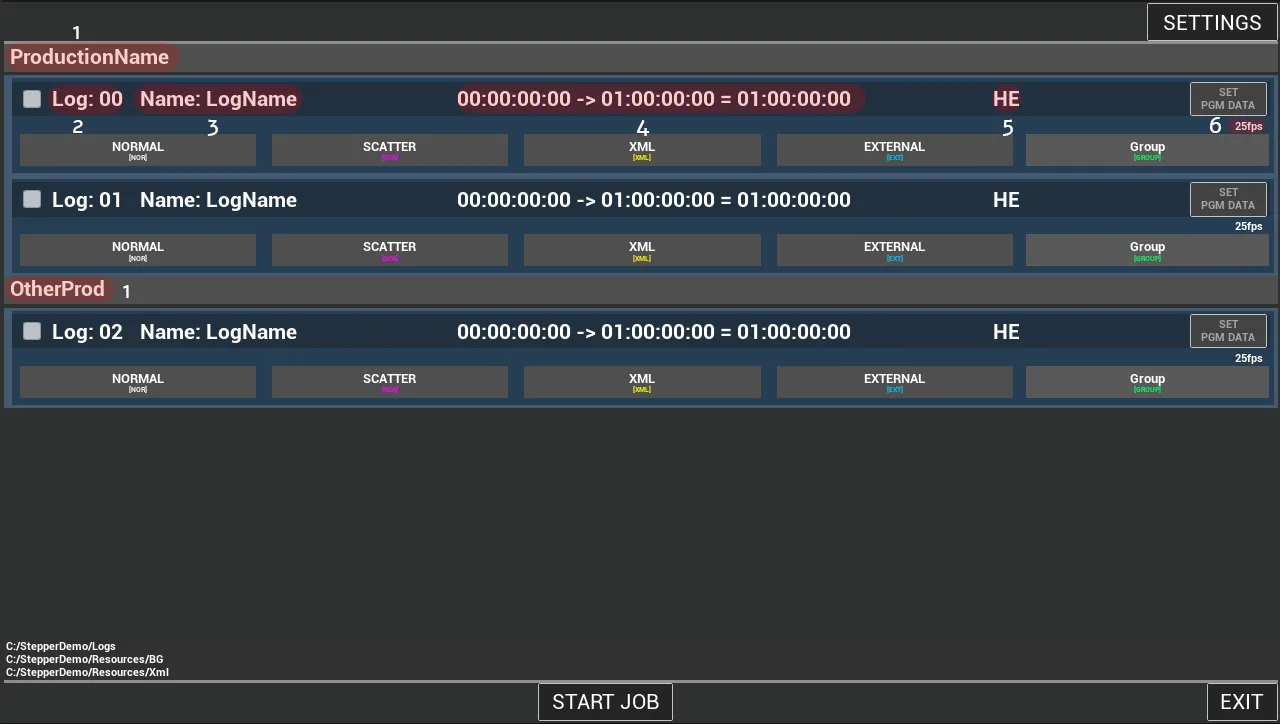
01 / Job Planner Operators select logs and camera pipelines from one production queue.
Stepper Job Planner showing production logs and Normal, Scatter, XML, and External camera actions
01

Architecture

The game records what happened. Stepper rebuilds it.

During the show, the game software writes timestamped events to a chronological log. Stepper ingests that log and replays those events on their original frames to create production output.

01 / GAME SOFTWARE

The game records the moments production will need.

The live game already knows every answer, score change, and graphic trigger. It writes only the relevant events, with enough context for Stepper to reproduce them later.

LIVE GAME EVENT SelectAnswer
Timecode
00:09:00:00
Event
SelectAnswer
JSON data
{ "SelectedAnswerId": 1 }
02

Render pipelines

One job model, four kinds of output.

Camera type selects an orchestration strategy while the same parsed production data continues to drive scene state.

01

Normal

Replays a complete LogPacket from its first frame to its last, updating actors, widgets, cameras, media, and encoding on every step.

Full episode or continuous camera pass
02

Scattered

Scans for configured action tags, fast-forwards prior state immediately, then renders only the required window around each event.

Targeted pickup shots at exact show moments
03

XML

Builds FCPXML projects with bins, sequences, synchronized media, transitions, loops, and keyframed effects for editorial workflows.

Structured timelines ready for Premiere
04

External

Launches and monitors external processes, streams their output, captures exit codes, and folds completion back into the Stepper job lifecycle.

Automation beyond the Unreal process
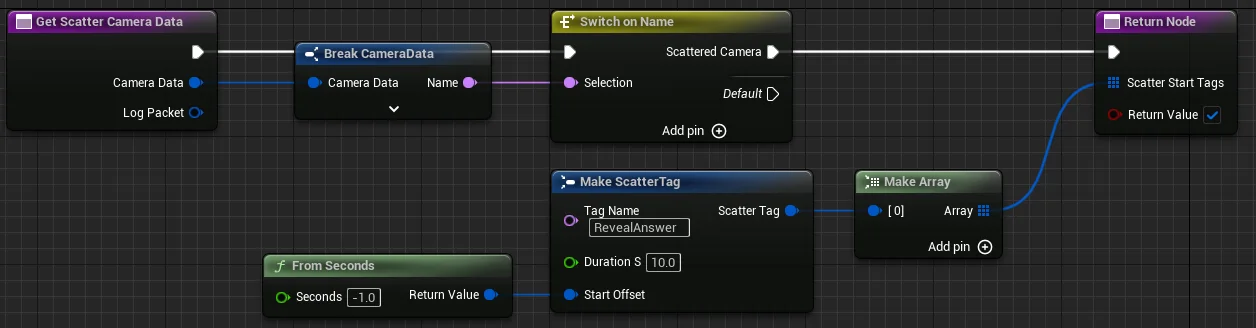
Scatter cameras declare which action starts a clip, its duration, and its time offset.
Blueprint configuration selecting an action tag, duration, and offset for a scattered camera render
03

Extension layer

Production logic stays accessible to both C++ and Blueprint.

The core owns timing and orchestration. Project teams extend behavior through focused Unreal classes and overridable APIs.

Actors

Frame-driven scene behavior

StepperActor parses selected action types into active actions, then receives per-frame progress for deterministic animation.

Widgets

Timed graphics and animation

StepperWidget synchronizes UMG animation updates and event callbacks with the same stepping clock as the scene.

Components

Reusable ordered updates

StepperActorComponent packages reusable behavior with explicit init, reset, and pre- or post-actor frame update phases.

Media

Frame-by-frame playback

Media processes advance source files by frame rather than relying on real-time playback synchronization.

Blueprint

14 documented API groups

APIs cover stepping, logs, tags, math, file IO, JSON, external processes, scatter rendering, widgets, and XML construction.

C++

100+ documented types

Managers, data structures, workers, editor-facing objects, and runtime helpers expose the platform below the Blueprint layer.

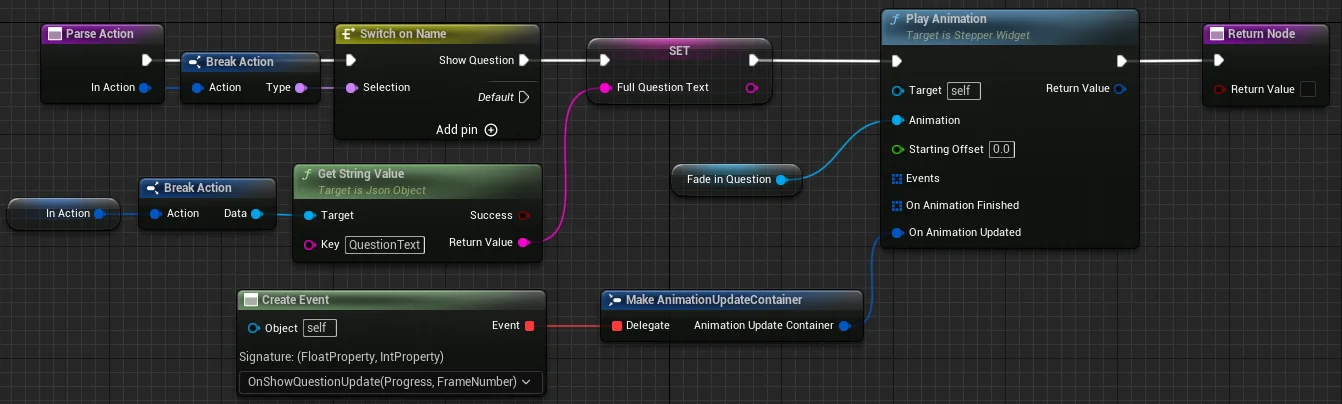
A project Blueprint reads JSON from a logged event and drives a frame-synchronized widget animation.
Blueprint graph reading question text from logged JSON and playing a synchronized Stepper widget animation
04

Production outcomes

Built for repeatable output, not real-time playback.

Stepping decouples production time from wall-clock time. Complex scenes can render as slowly as needed while every action, animation, camera, and media frame remains aligned.

Integrated encoding 90+ FPS

Sustained at 4K in the offline FFmpeg pipeline, while the engine remained responsible for deterministic frame generation.

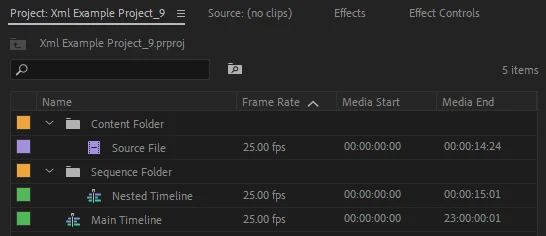
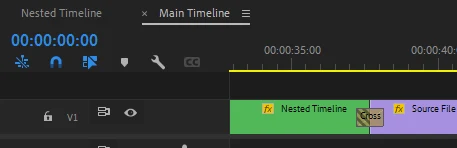
04 / Editorial handoff Generated XML builds the project hierarchy and places timed clips and transitions directly on the edit timeline.
Generated project structure Premiere project panel with generated media folders, source file, nested timeline, and main timeline
Generated timeline Premiere timeline containing generated nested clips, a source clip, and a cross dissolve
Need a system like this? Let’s solve the hard part.